Can AI resolve a family conflict? Reflections from a developing mediation practice
25 October 2026
How my studies at the University of Salford are helping me build a conflict resolution practice in Switzerland.
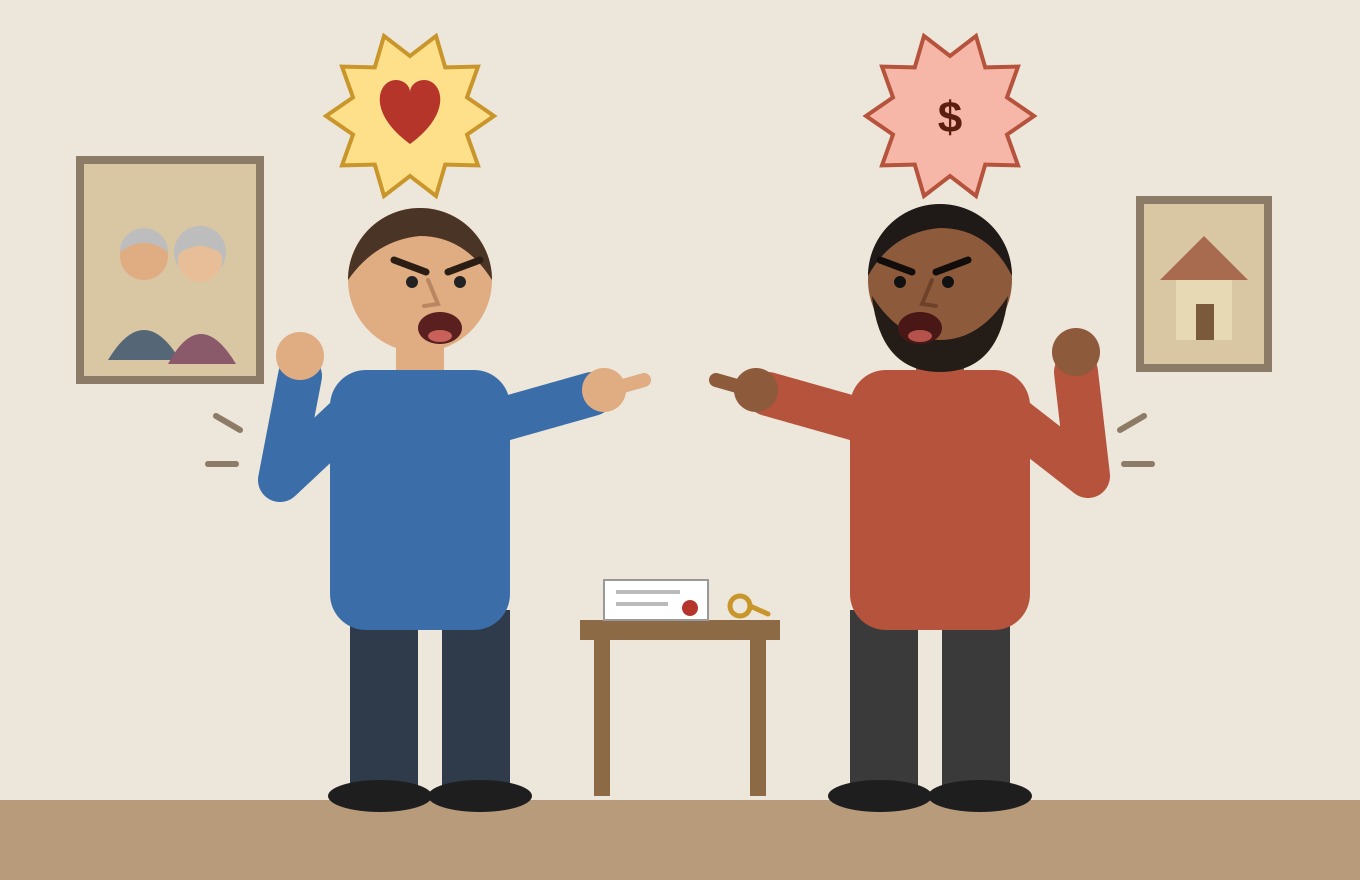
Some identifying details have been changed to protect the privacy of those involved.
I am on the phone with a friend. He is upset, on the brink of tears.
“My brother believes I have always been favoured by our parents. Now he wants more than half the inheritance.”
I have known both brothers for many years. There have been good times and difficult times, but, in my friend’s account, his brother was always convinced that my friend was the favourite son and got more: more attention, more money, more love. Now their parents have died. There is no longer an opportunity to challenge them about their decisions, explain what hurt, or hear something that might change how the past feels.
My friend tells me that his brother has engaged a lawyer. They disagree about earlier financial gifts and what a fair division of the inheritance would mean. My friend remembers those gifts differently. He also wants to honour his parents’ wish to divide the inheritance equally. Yet he wants something else too: a relationship with his brother.
“I only have one brother,” he says. But he no longer trusts that giving in to his wishes will bring them closer.
I am hearing one person’s experience. His brother might tell a very different story. As a friend, I can listen; I cannot know what the other person thinks or experiences.
Then my friend tells me he has already asked a generative AI tool for advice.
AI suggests next steps. Are we ready to take them?
The suggestions sound reasonable: seek legal advice, document the financial gifts he received, and consider the outcome he hopes for, which isn't monetary but a good relationship with his brother. The tool also suggests mediation so that both brothers can be heard.
How do you invite someone into a conversation when you expect another accusation? Having advice is different from feeling able to act on it.
This is what interests me about AI and conflict resolution: how a useful suggestion becomes a conversation.
The question connects my mediator training with my digital marketing studies at the University of Salford: supporting difficult conversations and helping people discover that support.
What can AI offer in conflict situations?
AI can help us organise a tangled account and find words for what troubles us. When we feel stuck, that can be a useful beginning.
However, when we describe a dispute ourselves, we may miss the other person’s experience. An interpretation can feel convincing because it fits what we already believe.
I would treat AI suggestions as possibilities to explore; they cannot establish another person’s motives.
Before discussing an arrangement, the brothers may need space to explain what fairness means to each of them, and what they need acknowledged.
What happens when the conversation becomes real?
Imagine the brothers eventually meeting with an independent mediator.
One says, “You always got more.” Old fury arises; someone falls silent. A response prepared beforehand no longer seems right.
Perhaps neither person has found words for the hurt yet. Perhaps one is finally ready to hear something said many times but never understood.
This is the work I want to be present for.
My approach is to give each person equal space and time to speak and be heard. I ask questions, check my understanding, and help people express the concerns and needs behind their reactions. If the conversation moves too quickly, we can pause. If something remains unclear, we can stay with it.
Mediation does not mean deciding who is right or imposing an agreement. The people involved retain responsibility for their decisions. My role is to support a process that helps them understand more and explore a way forward together.
You can read more about my approach to mediation and the process.
How the University of Salford is helping me build my practice
My main professional work is communication during organisational transformations. Developing a conflict resolution practice brings a new challenge: how can I reach people who need support, can describe their conflict, but don't think of a mediator to help them with it?
My studies at the University of Salford are helping me approach that question more systematically.
I see AI as a potential ally to mediators: it can help people prepare and recognise when a supported conversation might be useful. The human mediator picks up that thread when people are ready to speak with each other, making room for their different experiences as the conversation unfolds.
My aim is to help people find support that fits their situation and is within reach, and digital marketing gives me the tools to enable that.
Conflict support and mediation in Winterthur and the Canton of Zurich
I am Eva Maria Bieda. Alongside my ongoing mediator training, I offer conflict support in German and English, based in Winterthur and focused on the Canton of Zurich.
If a difficult situation is occupying your thoughts, you do not need to arrive with a diagnosis or a solution. We can begin with what you are experiencing.
Get in touch for an initial conversation.
Gemeinsam Dialog gestalten.